Why the Angle of a Shade Sail Post Matters
Shade sails may appear relatively simple structures, but achieving a safe, stable and visually attractive finished installation relies on careful consideration of every component. One detail that can sometimes raise questions during the design and construction stages is the angle of the supporting posts.
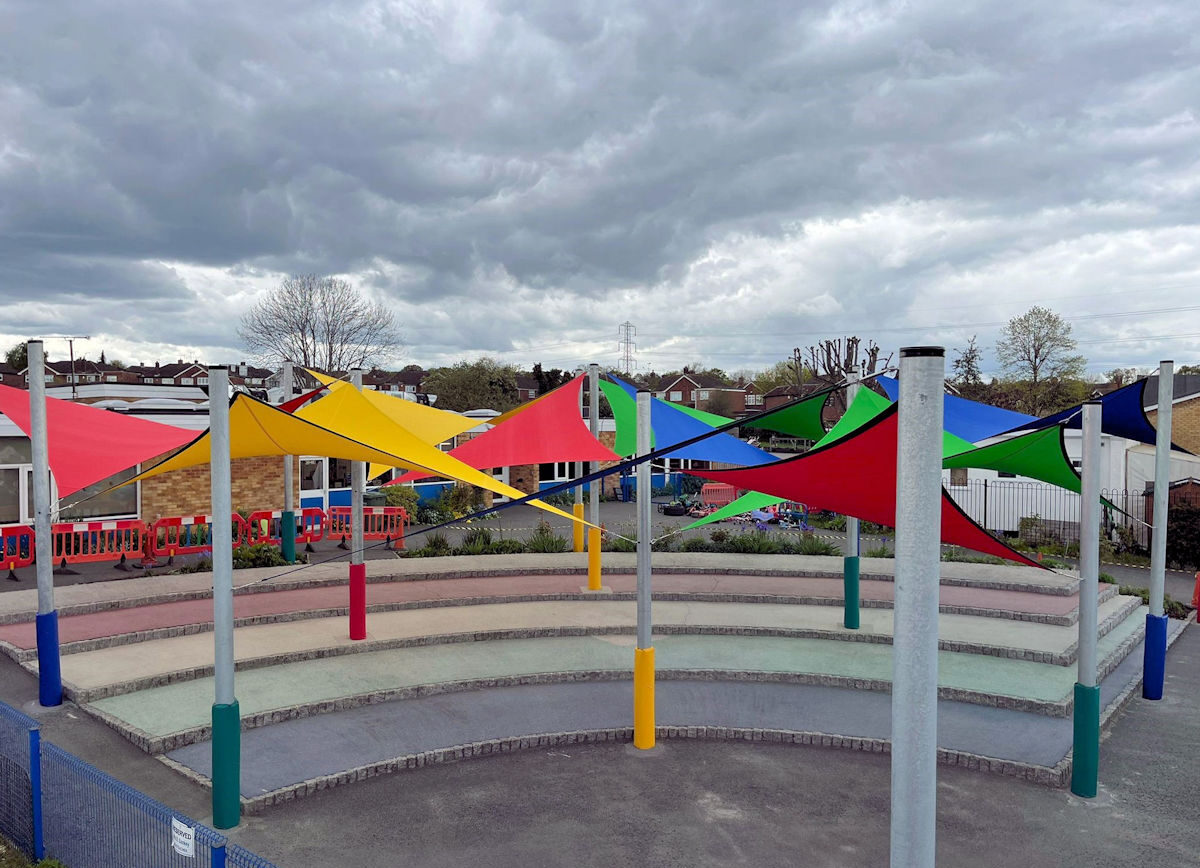
Unlike many traditional canopy posts, shade sail posts are typically installed with a deliberate outward inclination rather than completely vertical. This is not simply a design feature; it plays an important role in supporting the tension required within the sail.
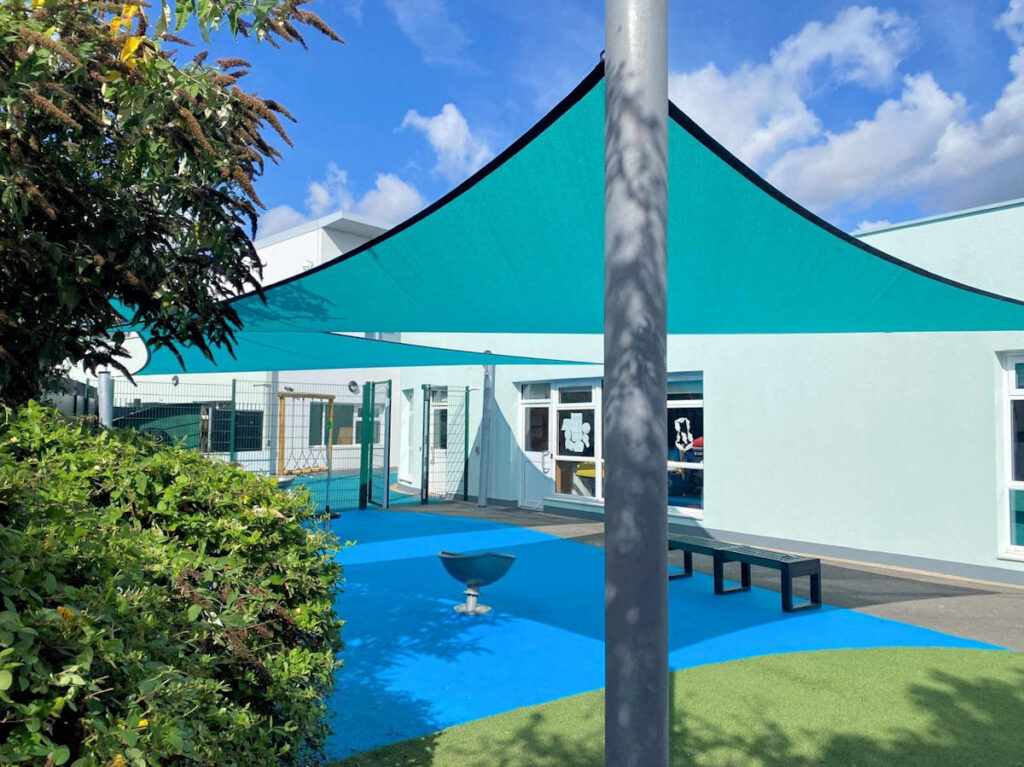
Understanding the Forces Created by a Tensioned Shade Sail
A shade sail needs to be correctly tensioned to achieve its intended shape and performance. When the fabric is tightened between its fixing points, significant tensile forces are transferred through the connections and into the supporting structure.
Where posts form the fixing points, part of this force naturally pulls them inwards towards the sail.
If this movement is not appropriately accounted for within the design, the tension generated by the sail could cause the posts to deflect inwards. Even relatively small amounts of movement can affect the tension and appearance of the finished sail.
This is why the position and angle of the posts need to be considered as part of the complete shade sail system rather than viewed in isolation.
Why Are Shade Sail Posts Angled Outwards?
By installing the posts with a calculated outward inclination by 3 and 5 °, effectively leaning slightly away from the shade sail, the structure is better positioned to resist the inward forces generated when the fabric is tensioned.
As the sail is tightened, the posts are subjected to loads pulling towards the centre of the structure. Their outward inclination helps counteract these forces and supports the required tension within the finished system.
Think of it as designing the posts in anticipation of the direction in which the sail will pull.
The result is a structure capable of maintaining the tension necessary to keep the shade sail secure and correctly formed.
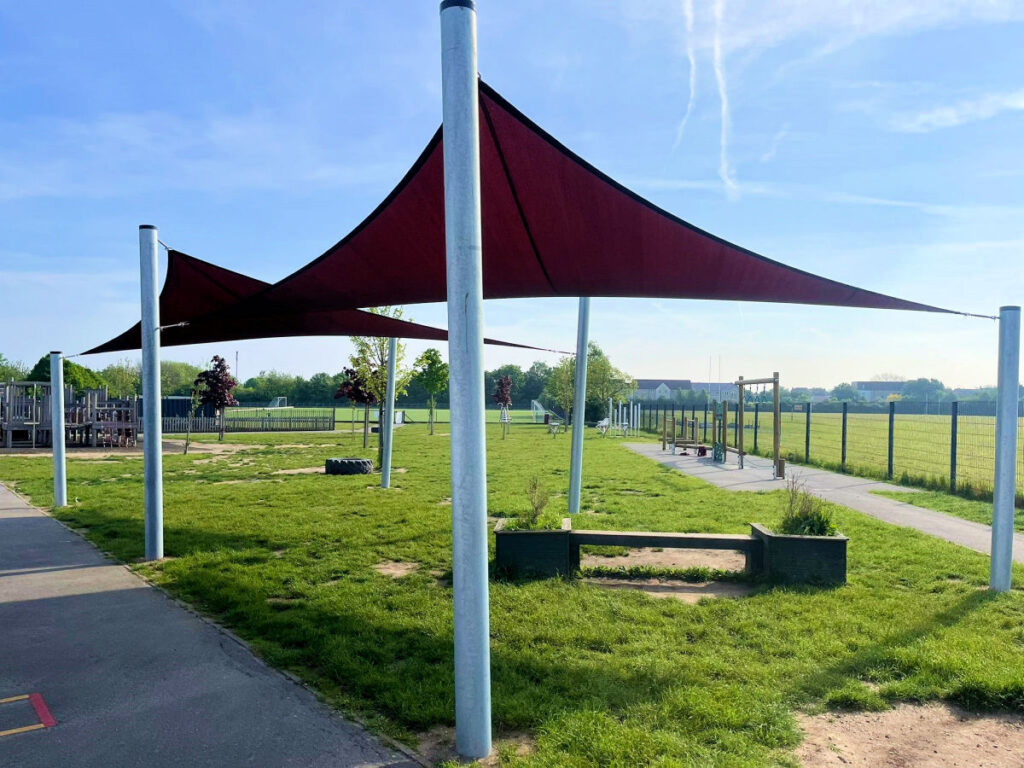
Maintaining the Correct Sail Tension
Correct tension is particularly important with tensile fabric structures.
A properly tensioned shade sail creates the distinctive clean, stretched appearance associated with these systems. Maintaining appropriate tension also helps reduce unwanted movement in the fabric and allows the sail to perform as intended.
The posts, fixings, foundations and sail therefore need to work together as one engineered system.
This is why changing apparently minor details such as the post position, angle or foundation arrangement without considering the overall design can have wider implications for the completed installation.
An Important Consideration During Groundworks
For contractors carrying out enabling works or foundations ahead of a shade sail installation, it is particularly important that the specified post positions and angles are followed accurately.
Installing a post vertically when the design requires an outward inclination is not simply a cosmetic variation. Once the sail is installed and tensioned, that post will be subjected to forces that the original arrangement was specifically designed to accommodate.
Similarly, relocating foundations or changing fixing positions can alter the geometry of the sail and the loads transferred through the structure.
Following the approved drawings and installation requirements helps ensure that the final structure performs as designed and avoids potentially costly alterations later in the project.
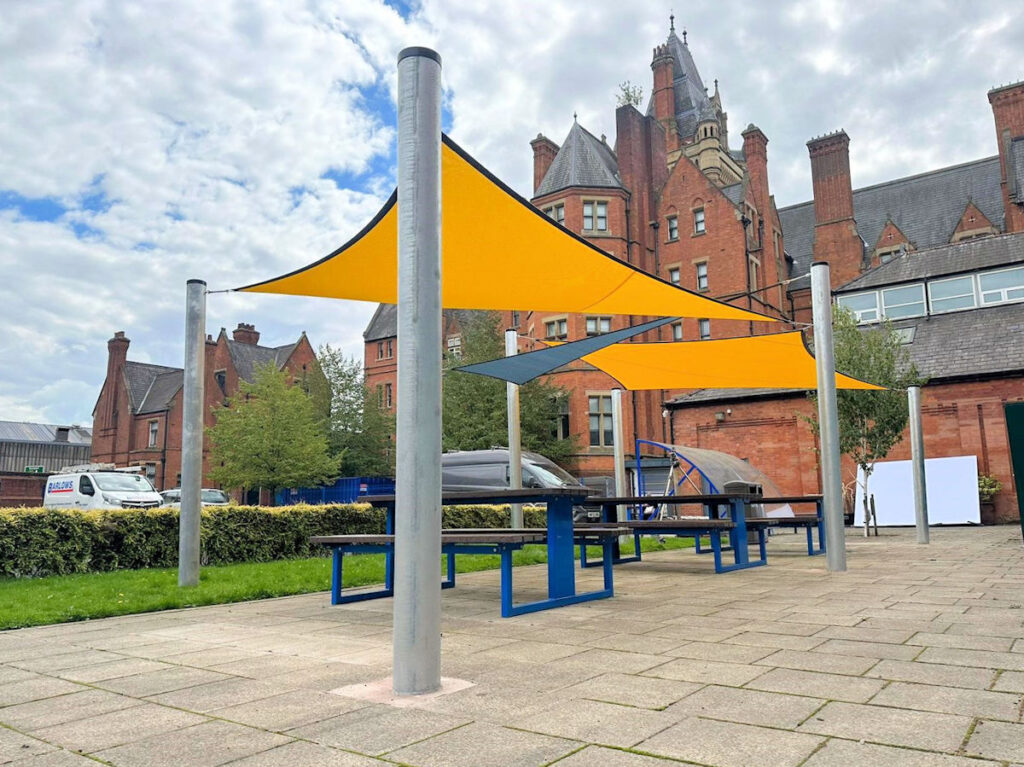
Designing Shade Sails as a Complete System
For architects and contractors specifying shade sails, the key consideration is that the sail, posts, fixings and foundations form part of a complete system.
Post inclination is just one example of how the finished appearance of a tensile structure is influenced by the engineering behind it. What may initially look like a simple architectural feature relies on carefully controlled geometry and tension to create the desired result.
By getting these details right from the outset, the finished shade sail can deliver the clean architectural appearance, stability and long-term performance expected from a professionally designed tensile structure.

Able Canopies Ltd. design, manufacture and install commercial grade canopies, shade sails, awnings and shelters across the UK. We specialise in servicing the education, leisure, healthcare and retail sectors and have extensive experience working with architects and contracting firms on small and large projects.
For more information or to find out how to submit a tender please contact us
Follow us on our social media accounts for the latest funding advice, new products & latest news:
Twitter | Facebook | LinkedIn | Instagram
Categories
- 20 Years of Able Canopies
- Canopies for Architects & Contractors
- Canopies for Healthcare
- Canopies for Restaurants, Bars and Hotels
- Canopies for Retail & Commercial
- Canopies for Schools
- Canopies for Sports & Leisure
- Canopy Maintenance
- Case Studies
- Cool Links & Facts
- Cycle Parking Solutions
- Dates for Your Diary
- Eco-Friendly Holiday Crafts
- Employee Spotlight
- Environmental Tips
- Funding and Fundraising
- How to... Get the Most out of Your Canopy
- Insights: Able Canopies News
- Latest News
- Latest Stories
- Lockdown Outdoor Learning & Play Ideas
- MD News
- Newsletters - Academies
- Newsletters - Architects & Contractors
- Newsletters - Schools & EYFS
- Outdoor Learning
- Outdoor Play
- Planning Your Cycle Parking
- Product Focus
- Solar Carports
- Spring Fundraisers 2017
- Summer Shade
- The Good Canopy Guide
- Uncategorised
- Wall Mounted Canopies