
Design, Durability and Decision-Making
Why these pillars will define the built environment in the year ahead
Looking ahead into 2026, the landscape is increasingly shaped by evolving client expectations, regulatory pressures, material challenges, and the strategic decisions made early in project lifecycles. In a year expected to bring modest growth after recent sector volatility, understanding how design, durability, and decision-making intersect is critical for anyone involved in creating long-lasting, high-performance built environments.
Recent forecasts suggest that UK construction output will grow in 2026, following slower activity through 2024 and 2025. Public and private sectors alike are expected to contribute to this uptick, with housing, infrastructure, and repair/maintenance segments achieving positive momentum.
However, growth is not a guarantee—economic headwinds such as high borrowing costs, subdued private sector demand, and ongoing skills shortages continue to exert influence. Navigating these realities requires robust early-stage decision-making and design planning that can absorb uncertainty and adapt to change.
Design: More Than Aesthetic—It’s Strategic
Design is not just about what structures look like—it’s about how they perform over time.
Performance, Sustainability, and Regulation? Clients and regulators alike are demanding designs that go beyond compliance to deliver on carbon, energy efficiency, lifecycle costs, and user experience. Low-carbon materials, digital carbon tracking, and sustainability assessments are transitioning from optional extras to expected components of major projects.
Technologies like BIM are practical, widely adopted processes that support better coordination, specification retrieval, clarity, and control throughout a project’s lifecycle. More importantly, BIM supports by allowing designers and specifiers to assess materials, connections, and detailing in advance. BIM is less about technology and more about better decision-making—aligning design intent with build quality and long-term value.
Durability: Building to Last
Durability has always been a core principle in construction, but in 2026 it becomes a differentiator rather than a default expectation.
With construction materials and labour cost pressures still influencing budgets, choosing materials and design strategies that reduce maintenance needs and extend service life offers tangible long-term value. Projects with durable external structures also mitigate life cycle costs—a point increasingly scrutinised by clients and owners.
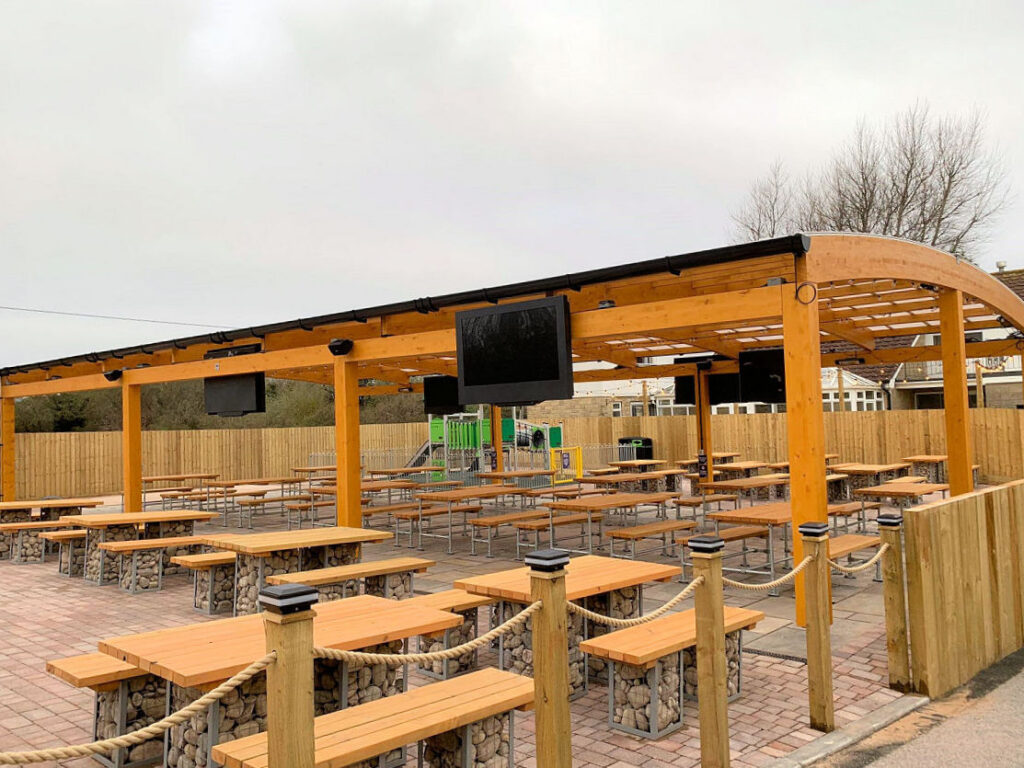
For external structures—such as canopies, shelters, glazed façades, and covered walkways—durability is not just about surviving the elements; it is about preserving user comfort, accessibility, and appearance year after year. These structures often perform in high-impact zones (entrances, gathering spaces, and transport hubs), so the choice of materials, fixings, and design detailing must reflect performance under real-world conditions.
Decision-Making: Early Choices Shape Outcomes
Strong early decisions are how projects avoid downstream issues. Whether it’s selecting a canopy system for a school campus or specifying façade performance in a mixed-use development, front-loaded thinking drives better outcomes.
Decision-making in 2026 will increasingly consider:
- Lifecycle cost vs initial cost
- Carbon impact vs regulatory compliance
- Project complexity vs labour availability
Emerging research in construction management also highlights the value of structured, data-driven frameworks—including predictive and collaborative approaches that reduce rework and improve delivery certainty.
What This Means for 2026 Projects
Taken together, design, durability, and decision-making form a triad of success for modern construction:
- Thoughtful design anticipates challenges rather than reacts to them.
- Durable solutions deliver genuine value over decades, not just months.
- Informed decisions early in the project lifecycle protect quality, budget and performance.
For construction professionals and specifiers, 2026 will reward those who embrace foresight, sustainability, and resilience as core, not secondary, priorities.
Conclusion
Construction in 2026 will not be defined by volume alone, but by how intelligently we design, how durably we build, and how decisively we plan.
Projects that integrate meaningful design thinking, durability-focused materials and disciplined decision-making will stand out—not only for what they deliver in form, but for their lasting performance in use.
References
UK Government – Department for Business & Trade
- Construction Statistics and Industry Outlook
- UK Government publications providing data on construction output, materials, and sector performance.
https://www.gov.uk/government/collections/construction-statistics
PwC UK
- Construction and Housebuilding Outlook
- Analysis of UK construction market trends, investment conditions and future forecasts.
https://www.pwc.co.uk/industries/capital-projects-infrastructure/insights.html
Royal Institution of Chartered Surveyors (RICS)
- UK Construction and Infrastructure Market Insights
- Industry insight on cost pressures, skills shortages, sustainability and long-term asset performance.
https://www.rics.org/uk/news-insight/research/
UK BIM Framework / Centre for Digital Built Britain (CDBB)
- The UK BIM Framework and ISO 19650 Guidance
- National guidance on Building Information Modelling and information management across the asset lifecycle.
https://www.ukbimframework.org/
British Standards Institution (BSI)
- BS EN ISO 19650 – Organization and digitization of information about buildings and civil engineering works
- The international standard governing BIM processes and information management.
https://www.bsigroup.com/en-GB/iso-19650/
Construction Leadership Council (CLC)
- Industry Strategy and Guidance
- Leadership perspectives on productivity, quality, sustainability, and long-term value in UK construction.
https://www.constructionleadershipcouncil.co.uk/
Institution of Civil Engineers (ICE)
- State of the Nation & Infrastructure Reports
- Research exploring durability, asset performance, and decision-making in the built environment.

Able Canopies Ltd. design, manufacture and install commercial grade canopies, shade sails, awnings and shelters across the UK. We specialise in servicing the education, leisure, healthcare and retail sectors and have extensive experience working with schools, councils, architects and contracting firms.
For more information on our products and services, please contact us
Follow us on our social media accounts for the latest funding advice, new products & latest news:
Twitter | Facebook | LinkedIn | Instagram
Categories
- 20 Years of Able Canopies
- Canopies for Architects & Contractors
- Canopies for Healthcare
- Canopies for Restaurants, Bars and Hotels
- Canopies for Retail & Commercial
- Canopies for Schools
- Canopies for Sports & Leisure
- Canopy Maintenance
- Case Studies
- Cool Links & Facts
- Cycle Parking Solutions
- Dates for Your Diary
- Eco-Friendly Holiday Crafts
- Employee Spotlight
- Environmental Tips
- Funding and Fundraising
- How to... Get the Most out of Your Canopy
- Insights: Able Canopies News
- Latest News
- Latest Stories
- Lockdown Outdoor Learning & Play Ideas
- MD News
- Newsletters - Academies
- Newsletters - Architects & Contractors
- Newsletters - Schools & EYFS
- Outdoor Learning
- Outdoor Play
- Planning Your Cycle Parking
- Product Focus
- Solar Carports
- Spring Fundraisers 2017
- Summer Shade
- The Good Canopy Guide
- Uncategorised
- Wall Mounted Canopies